3 Simple Steps to Build an Emergency Fund
Follow these 3 simple steps to build a robust emergency fund, providing financial security for unexpected life events.
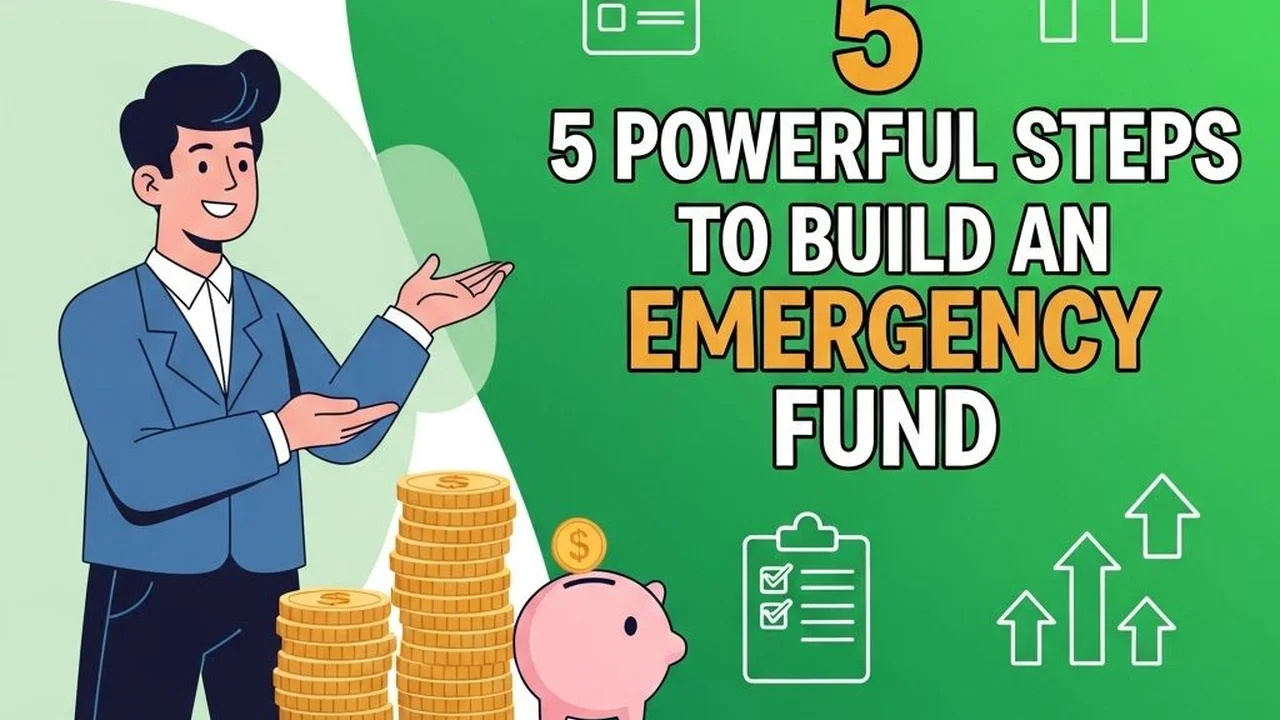
Follow these 3 simple steps to build a robust emergency fund, providing financial security for unexpected life events.
3 Simple Steps to Build an Emergency Fund
Understanding the Importance of an Emergency Fund for Financial Security
Let's be real, life throws curveballs. One minute you're cruising along, feeling good about your finances, and the next, your car breaks down, your pet needs emergency surgery, or you suddenly lose your job. These aren't just minor inconveniences; they can be full-blown financial disasters if you're not prepared. That's where an emergency fund comes in. Think of it as your financial safety net, a dedicated stash of cash specifically for those unexpected, unavoidable expenses. It's not for a new TV or a fancy vacation; it's for keeping your head above water when life gets tough. Without one, you might find yourself racking up high-interest credit card debt, dipping into your retirement savings, or even worse, facing eviction or foreclosure. Building an emergency fund isn't just about having money; it's about peace of mind, reducing stress, and maintaining your financial stability when the unexpected happens. It's a cornerstone of sound personal finance, giving you the breathing room to navigate life's inevitable challenges without derailing your long-term financial goals. So, let's dive into how you can build this crucial financial buffer, step by simple step.
Step 1 Define Your Emergency Fund Goal How Much Do You Really Need
Alright, first things first: how much money should you actually aim for? This isn't a one-size-fits-all answer, but there are some general guidelines. Most financial experts recommend having at least three to six months' worth of essential living expenses saved up. For some, especially those with less stable income or dependents, even 9 to 12 months might be a more comfortable target. But what exactly counts as 'essential living expenses'? This is where you need to get real with your budget. We're talking about the absolute necessities: housing (rent or mortgage), utilities (electricity, water, gas, internet), food, transportation (car payment, insurance, gas, public transport), and minimum loan payments (student loans, credit cards). Things like dining out, entertainment subscriptions, or that daily fancy coffee? Those are discretionary and don't count towards your essential expenses. Grab a pen and paper, or open up a spreadsheet, and start listing out these non-negotiable monthly costs. Add them up, and then multiply that number by three, six, or even twelve, depending on your comfort level and job security. That final number is your emergency fund goal. Don't get overwhelmed if it looks big; remember, you're building this over time. The key is to have a clear target so you know what you're working towards.
Calculating Your Monthly Essential Expenses for Emergency Fund Planning
Let's break down how to calculate those essential expenses. This isn't just about looking at your bank statement; it's about a deep dive into what you absolutely cannot live without. Start by reviewing your bank and credit card statements from the last few months. Categorize every single expense. Then, ruthlessly cut out anything that isn't essential. For example:
- Housing: Rent/Mortgage, property taxes (if applicable), homeowner's insurance.
- Utilities: Electricity, gas, water, internet. Maybe even a basic cell phone plan.
- Food: Groceries for home cooking. Forget the takeout for this calculation.
- Transportation: Car payment, car insurance, gas, public transport passes.
- Healthcare: Health insurance premiums, essential prescriptions.
- Minimum Debt Payments: Student loan minimums, credit card minimums (though ideally, you'd tackle high-interest debt before or alongside building your fund).
- Childcare: If absolutely essential for you to work.
Once you have this list, sum it up. Let's say your essential monthly expenses come out to $2,500. If you're aiming for six months, your target emergency fund is $15,000. This number might seem daunting, but having a concrete figure makes the goal tangible and achievable. Remember, this isn't about living a minimalist lifestyle forever; it's about understanding your baseline survival costs.
Factors Influencing Your Emergency Fund Size Job Security Dependents and Health
While three to six months is a good starting point, several factors should influence whether you lean towards the lower or higher end of that range, or even beyond. Consider your personal circumstances:
- Job Security: If you're in a highly stable industry with high demand for your skills, three months might feel sufficient. If your job is precarious, seasonal, or in an industry prone to layoffs, aiming for six to twelve months provides a much stronger buffer.
- Dependents: Do you have children, elderly parents, or other individuals who rely on your income? If so, a larger emergency fund is crucial to ensure their well-being in a crisis.
- Health: If you or a family member have chronic health conditions or anticipate significant medical expenses, a larger fund can cover deductibles, co-pays, or even lost income during recovery.
- Income Stability: Are you a freelancer, commission-based, or self-employed? Your income might fluctuate significantly. A larger emergency fund can smooth out those lean months.
- Other Debts: While an emergency fund is separate from debt repayment, having significant high-interest debt might mean you want a slightly larger fund to avoid adding to that debt in an emergency.
- Insurance Coverage: Good health, auto, and home insurance can reduce the financial impact of certain emergencies, potentially allowing for a slightly smaller fund. However, remember deductibles!
Ultimately, your emergency fund size is a personal decision based on your risk tolerance and life situation. It's better to be over-prepared than under-prepared when it comes to financial emergencies.
Step 2 Automate Your Savings Make It Painless and Consistent
Now that you know your target, how do you actually get there? The secret sauce is automation. Seriously, this is where most people succeed or fail. If you rely on willpower alone to transfer money into your emergency fund, you'll likely find excuses or 'more important' things to spend it on. Automation takes the decision-making out of your hands. Set up an automatic transfer from your checking account to a separate savings account every payday. Treat it like a bill you absolutely have to pay. Even if it's a small amount to start – say, $50 or $100 – consistency is key. As your income increases or you cut down on discretionary spending, you can gradually increase that automated transfer amount. The beauty of automation is that you'll barely notice the money leaving your account, but you'll definitely notice your emergency fund growing. This isn't just about convenience; it's about building a habit and leveraging behavioral economics to your advantage. Out of sight, out of mind, until you actually need it.
Choosing the Right Savings Account for Your Emergency Fund Accessibility and Interest
Where should you keep this precious emergency fund? Not under your mattress, and ideally, not in your primary checking account. You want it accessible but not too accessible, and you want it to earn a little interest if possible. Here are some options:
- High-Yield Online Savings Accounts: These are often the best choice. They typically offer significantly higher interest rates than traditional brick-and-mortar banks (think 4-5% APY vs. 0.01% APY). They're FDIC-insured, meaning your money is safe up to $250,000. While not instantly accessible like checking, transfers usually take 1-3 business days, which is perfectly fine for most emergencies.
- Traditional Bank Savings Accounts: Convenient if you want everything under one roof, but the interest rates are usually abysmal. If you choose this, make sure it's a separate account from your checking so you're not tempted to dip into it for non-emergencies.
- Money Market Accounts: These can offer slightly higher interest than traditional savings accounts and sometimes come with check-writing privileges or a debit card. However, they might have higher minimum balance requirements.
Products to Consider:
- Ally Bank Online Savings Account: Consistently offers competitive APY, no monthly fees, no minimum balance, and 24/7 customer service. Very popular for emergency funds.
- Marcus by Goldman Sachs Online Savings Account: Another strong contender with competitive rates, no fees, and excellent customer support.
- Discover Bank Online Savings Account: Offers a solid APY, no monthly fees, and 24/7 customer service.
- Capital One 360 Performance Savings: Good rates, no fees, and integrates well if you already bank with Capital One.
When comparing these, look at the current APY, any monthly fees, minimum balance requirements, and ease of linking to your primary checking account for automatic transfers. The goal is to find a secure, interest-bearing account that keeps your emergency fund separate and slightly out of immediate reach.
Setting Up Automatic Transfers Your Financial Superpower
This is the 'set it and forget it' part that makes all the difference. Here's how to do it:
- Log in to your online banking portal: Access the bank where your primary checking account is held.
- Navigate to transfers: Look for options like 'Transfer Funds,' 'Set Up Automatic Transfers,' or 'Recurring Transfers.'
- Select accounts: Choose your checking account as the 'from' account and your dedicated emergency fund savings account as the 'to' account.
- Enter amount: Decide on a realistic amount you can consistently save each payday. Start small if you need to, but be consistent.
- Set frequency: Choose 'bi-weekly' or 'monthly' to align with your pay schedule.
- Review and confirm: Double-check all the details before confirming the transfer.
That's it! Now, every time you get paid, a portion of your income will automatically move into your emergency fund. You won't have to think about it, and you'll be less likely to spend that money elsewhere. This simple act is incredibly powerful for building wealth and financial resilience.
Step 3 Boost Your Savings Accelerate Your Emergency Fund Growth
Once you've got the automation humming along, it's time to supercharge your savings. Reaching your emergency fund goal faster means you'll have that peace of mind sooner. This step involves actively looking for ways to free up more cash and direct it straight into your fund. Think of it as a temporary sprint. Every extra dollar you can find should go directly to your emergency fund until you hit your target. This might mean making some temporary sacrifices, but the security you gain is well worth it. Remember, this isn't about deprivation forever, but about prioritizing this crucial financial foundation.
Finding Extra Money Cutting Expenses and Increasing Income
This is where you get creative. Look for opportunities to either spend less or earn more. Every little bit helps!
Cutting Expenses:
- Temporary Budget Cuts: For a few months, cut out all non-essential spending. No dining out, no new clothes, cancel streaming services you rarely use.
- Review Subscriptions: Go through all your monthly subscriptions (gym, apps, streaming, etc.) and cancel anything you don't absolutely need or use.
- Cook at Home: Eating out is a huge budget killer. Meal prep and cook all your meals at home.
- Shop Smarter: Use coupons, buy generic brands, and plan your grocery list to avoid impulse buys.
- Negotiate Bills: Call your internet, cable, and even insurance providers to see if you can get a better rate.
- Reduce Energy Consumption: Turn off lights, unplug electronics, adjust your thermostat. Small changes add up.
Increasing Income:
- Side Hustles: Can you drive for a ride-sharing service, deliver food, freelance your skills (writing, graphic design, web development), or sell crafts online?
- Sell Unused Items: Declutter your home and sell clothes, electronics, furniture, or collectibles on platforms like eBay, Facebook Marketplace, or local consignment shops.
- Overtime at Work: If available, pick up extra shifts or work overtime.
- Temporary Gigs: Look for temporary contract work or seasonal jobs.
- Tax Refunds and Bonuses: Instead of spending these windfalls, direct them straight into your emergency fund.
- Cashback Rewards: If you use a cashback credit card responsibly, direct those rewards to your fund.
The more aggressively you pursue these strategies, the faster you'll reach your emergency fund goal. It's a temporary push for a long-term gain.
Leveraging Windfalls and Unexpected Income for Rapid Growth
This is perhaps the easiest way to give your emergency fund a significant boost. Any unexpected money that comes your way should be earmarked for your fund until it's fully stocked. This includes:
- Tax Refunds: Instead of seeing it as 'free money' for a splurge, view it as an opportunity to secure your financial future.
- Work Bonuses: If you receive a performance bonus, consider putting a substantial portion, if not all, into your emergency fund.
- Gifts: Birthday money, holiday gifts, or inheritances can be powerful accelerators.
- Rebates or Settlements: Any money you receive from a rebate, insurance settlement, or legal settlement.
- Selling Large Assets: If you sell a car, boat, or other significant asset you no longer need, direct the proceeds to your fund.
The key here is to have a plan for these windfalls before they arrive. If you wait until the money is in your account, the temptation to spend it on something fun will be much stronger. By pre-deciding that any unexpected income goes to your emergency fund, you remove the decision-making friction and accelerate your progress dramatically. Imagine getting a $2,000 tax refund and seeing your emergency fund jump by that much overnight – it's incredibly motivating!
Maintaining Your Emergency Fund A Lifelong Commitment
Building your emergency fund is a huge accomplishment, but it's not a one-and-done deal. Maintaining it is a lifelong commitment. Life happens, and you might need to dip into it. That's okay! That's what it's there for. The crucial part is to replenish it as quickly as possible after you've used it. Treat it like a broken bone that needs to heal; you wouldn't run a marathon on a freshly mended leg. Similarly, don't stop saving until your fund is back to its target level. Regularly review your essential expenses to ensure your fund size is still appropriate for your current life situation. If your rent goes up, or you have a new dependent, your target might need to increase. This ongoing vigilance ensures your financial safety net remains strong and ready for whatever comes next. It's a dynamic tool, not a static one, and by consistently nurturing it, you're investing in your long-term financial health and peace of mind.
:max_bytes(150000):strip_icc()/277019-baked-pork-chops-with-cream-of-mushroom-soup-DDMFS-beauty-4x3-BG-7505-5762b731cf30447d9cbbbbbf387beafa.jpg)